If you’re an avid Digg reader like me, you’re fully aware of the “who blogged this?” feature prominently displayed “above the fold” of each story. Among my three blogs, I’ve been meaning to publish posts inspired by the many stories that I read each week. As a matter of fact, I have a near-ten-page list of articles that I plan to write, most of them inspired by Digg stories. But, I haven’t had the time to actually put those ideas into words. Until now …
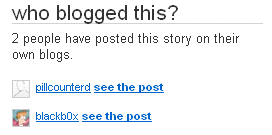 Today, I released an article about Bug Me Not in my Information Bank Blog. I remember finding out about this godsend website from Digg. Naturally, I wanted a link back from Digg on the “who blogged this?” section since it was a relevant post. So, I entered all the necessary blog data information in my profile page. Then, I clicked the “blog this” link on the corresponding digg story and pressed “Submit.”
Read the rest of this entry »
As a hacker, it is necessary to know the basics of port opening and forwarding. Why is that? Computer enthusiasts usually setup firewalls so that they can be online with less worries of an outside intrusion from the untamed Internet. They also usually have programs that require access to a port. Some programs include BitTorrent (Shame on you!), P2P Gnutella programs like Phex (Shame on you!), NetMeeting, some instant messaging programs, and servers (like HTTP, Remote Desktop, FTP). Since firewalls block all ports, it is necessary to manually open the ones that are needed.
Read the rest of this entry »
“Hacker Not Cracker?” Weird name, huh?
Some time ago, I was reading an article about the history of hackers. As opposed to the common pop-culture prototype of a black-garbed pubescent teenager breaking into computer networks, hackers were computer enthusiasts or hobbyists. Basically, these people were exceptional when dealing with computers. They longed to discover the inner workings of these machines and their dream was to become experts in the field. It wasn’t until popular media started using the term that it began to take a negative connotation.
Recently, I wrote a paper about the subject of hacker origins and the truth. In it, I defended this real meaning of “hacker.” So here I am, taking another step in dispelling the negative feelings that surround hackers.
The proper term for “black-hat” hackers who do malicious acts against others’ personal information and computers (such as stealing/using unauthorized credit card information) is “crackers.” (Not to be confused with saltines or the derogatory term for Caucasians) That being said, I am a “Hacker not [a] cracker.”
Read the rest of this entry »

